
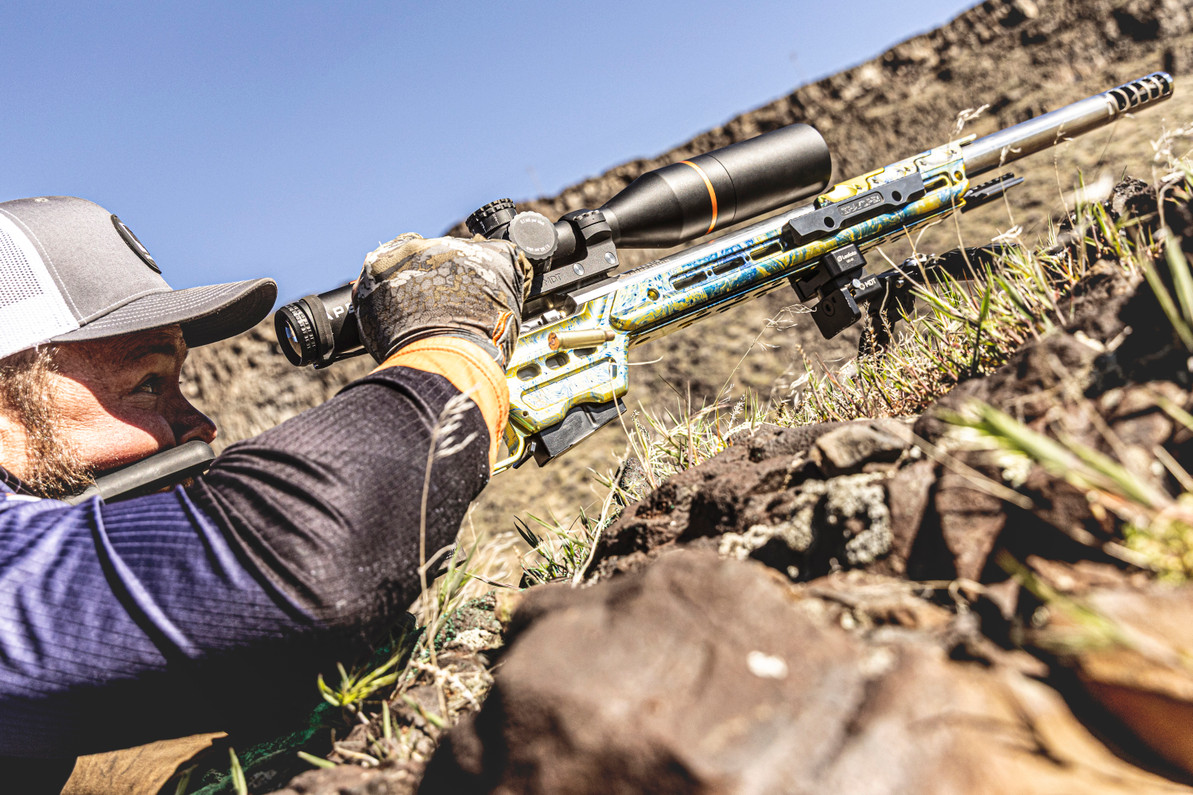
Dry Fire First: What Elite PRS Competitors Actually Do Between Matches
TRAINING & PERFORMANCE
Ask a top PRS shooter how many rounds they keep loaded at any given time, and the answers might surprise you. Not because the numbers are extreme — though some are — but because of what those numbers reveal about how the best competitors in the country actually train.
I recently put that question to a group of PRS match winners and world-event competitors across the United States. The survey was simple: How many rounds do you typically keep loaded? How does that affect your practice, your barrel life, your preparation? No right answers required.
What came back was a window into how elite-level precision rifle performance actually gets built — and the picture looks nothing like what most club shooters imagine.
The Numbers Are All Over the Map
Loaded round counts ranged from practically zero to 800-plus, and everything in between. One competitor keeps 500 rounds loaded at all times and has another case of Bergers on the way. Another loads only 20–50 rounds per match — just leftovers, really — and dopes his rifle at home on a Wednesday night.
One shooter put the utilitarian case bluntly: “I load ammo for a living, so I’m comfortable loading a whole barrel’s worth at one time. If load development is done properly, there’s no reason to change the load through the life of the barrel. Most people just don’t know how to do it.”
Another offered a careful accounting of his barrel budget: roughly 2,300 rounds total per tube, with about 150 for break-in, 100 for zeroing across a ten-match season, and perhaps 200–300 for practice. That leaves around 1,800 rounds for actual competition — and he thinks about every one of them.
Several competitors maintain a two-gun setup: a primary with a tighter ammo budget and a backup — often a Dasher — stocked with 400 rounds or more, ready for a gear emergency or a windy Friday afternoon. One noted he loaded 1,000 rounds before a stretch of three matches in four weekends. Pragmatic, not philosophical.
Here’s the Part That Might Sting
Almost none of these shooters practice much. And by “much,” I mean at all — at least not in the way most competitors think of practice.
One top finisher has had three live-fire practice sessions in the last three years. Three. He shoots somewhere between 2,500 and 3,000 rounds per year, almost entirely in matches. He goes dark from the finale until his first event of the new season, then takes about half a day to shake the rust off. “It’s more like riding a bike,” he said.
Another former year-round loader — “I used to keep 300 rounds loaded almost year-round back in ‘19 and ‘20” — now keeps none. The shift wasn’t from laziness. It was from understanding. Once you’re operating at a certain level, he explained, a lot of top competitors only true their gun the week before a match. Frequent live fire just becomes less necessary.
A typical “train-up” day for several respondents looks like this: 40 rounds. Then 5–10 rounds in the morning before a match to confirm zero and velocities. That’s it. The rest? Dry fire.
Why Live Fire Can Actually Hurt You
One respondent put his finger on something important, and it deserves to be quoted directly:
“When I practice with live rounds and I miss, it always turns into wind practice instead of concentrating on breaking shots on the target. Dry firing keeps the focus where it needs to be.”
That’s not a knock on reading wind — it’s a crucial PRS skill. But it’s a different skill from the mechanical and mental fundamentals that determine whether a shot breaks cleanly in the first place. When you’re burning live rounds and missing, your brain naturally chases the miss. You start calling wind, second-guessing your data, adjusting your hold. The shot process itself — position stability, trigger control, follow-through, the mental sequence — gets buried.
Dry fire keeps you honest. You can’t blame the wind on a trigger press that moved the muzzle. You can’t chase a cold bore shot when there’s no recoil. The feedback is pure: did you build a good position? Did you break the shot without disturbing the sight picture? Did you follow through?
What Elite Dry-Fire Actually Looks Like
Based on the survey responses and broader PRS coaching experience, the dry-fire habits of top competitors share several consistent threads — even if no two shooters describe it the same way.
Position work comes first. Getting into a solid, repeatable position quickly — off a barricade, kneeling, standing, whatever the prop demands — is the foundation everything else is built on. Not muscle-grinding it into place, but finding the bone support that lets the reticle settle without effort. The goal is getting “comfortable in uncomfortable” so that match-day positions feel familiar rather than desperate.
Trigger control is the second pillar. Most serious dry-fire practitioners run 10–30 perfect repetitions per session — not for volume, but for quality. The emphasis is on a straight-back press, no anticipation, no “gopher” head lift after the break. Many watch the reticle through the full bolt cycle, training themselves to stay in position even after the shot.
Process and mental sequencing round it out. Some competitors run a conscious “hard reset” before each rep — verbally or mentally walking through every step with full awareness. Others use a structured sequence like Dial–Target–Bolt–Shoot to build automatic, pressure-resistant habits. The point isn’t the specific sequence; it’s having one, and owning it.
Sessions are typically short — five to fifteen minutes — and frequent. Daily, or close to it. This is not the weekend warrior approach. Neural pathways build through repetition over time, not through marathon sessions. Five focused minutes every morning does more than two hours once a month.
The Epiphany Hidden in the Data
When I sent out this survey, I mentioned that I thought I’d had an epiphany recently. Having read the responses, I’m more sure of it.
The question about loaded rounds was really a question about mindset — about how these competitors think about preparation, resource management, and where performance actually comes from. And the answer that emerges, across shooters at every level of this group, is the same: it doesn’t come from volume. It comes from quality, consistency, and knowing what you’re actually training.
The best among them have essentially decoupled “practice” from “live fire.” They practice constantly — in their garage, in their living room, in their head — and they shoot when it’s time to confirm or compete. The barrel is a budget, and they’re not wasting it on repetitions that dry fire can deliver more cleanly.
One shooter put his philosophy with disarming honesty: “My way is not the right way, but it is the lazy way.” He loads minimal ammo, dopes his rifle mid-week at home, brings a spare gun as insurance, and heads home early when it’s cold. He’s also winning matches.
Maybe the lazy way and the smart way have more overlap than most of us want to admit.
Recent Posts
-
Half Hearted Cleaning
Recently I got a Douglas barrel from the West Virginia barrel maker over by Charleston. They’ve been …Oct 14th 2026 -
Beyond Talent
If you go onto Cal Zant's Precision Rifle Blog, one of the most common themes when he interviews acc …Oct 6th 2026 -
Points of Contact in PRS Barricade Shooting
How many points of contact should you aim for, for effective shooting? Typically 2 points of contact …Sep 30th 2026