
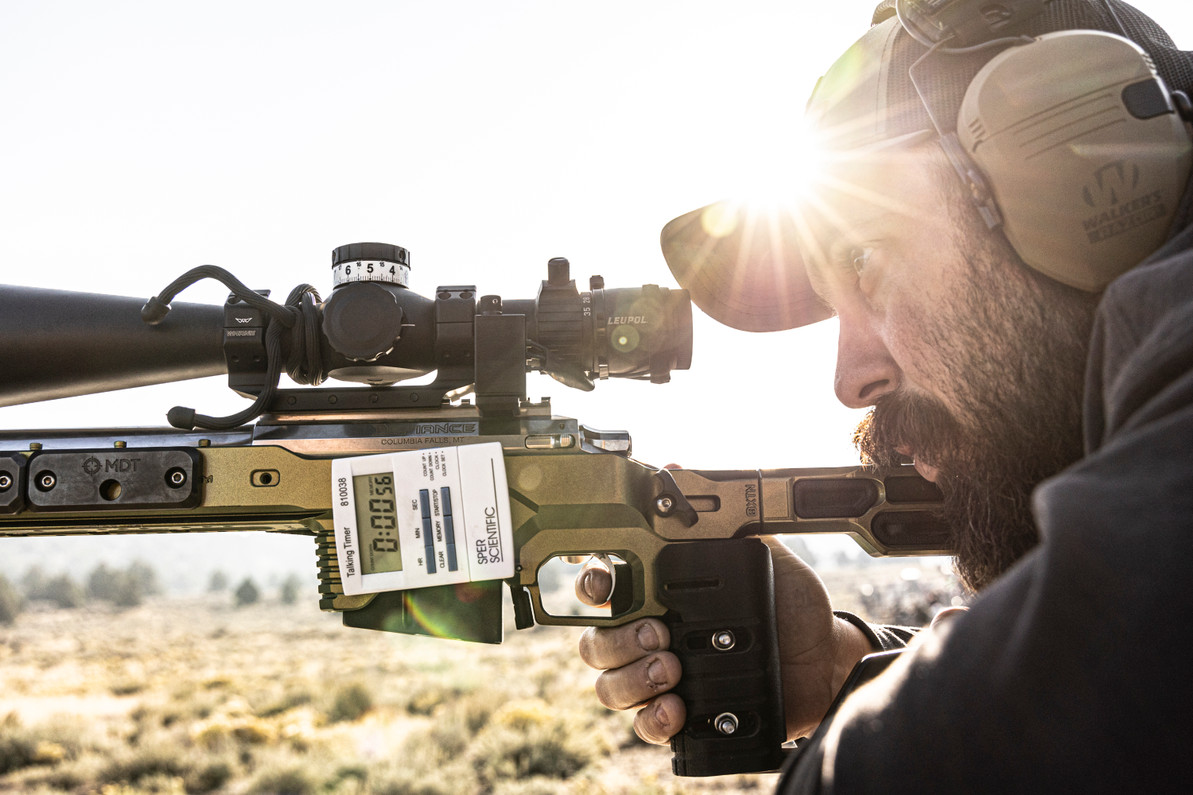
Trigger Testing - What The First Pull Doesn’t Tell You
An honest look at what it takes to understand a NEW trigger — and how first impressions get it wrong.
Somebody hands somebody else their rifle. The guy gets behind it, takes a breath, pulls the trigger and hands it back. “Feels a little spongy.” “Yeah, not sure about the overtravel.” The conversation moves on and the opportunity to change heart and minds is gone.
The rifle that just got handed back? It had a Bix’n Andy TacSport Pro-X in it - set up for the owner’s preference - not for the guy trying it for the first time. The trigger wasn’t spongy, it was different from what he was used to. The shooter didn’t understand what he was feeling. That impression is going to last longer than it should.
The First Pull Problem
Run a TriggerTech Diamond for a few years and you develop a feel for what that trigger does. The Diamond has a very distinct hard back wall when it breaks. Clean, snappy, and the stop is immediate. That’s what your brain has been calibrated to. Your finger knows where it’s going before you pull.
Then you pick up a two-stage Bix’n Andy for the first time.
The first stage has travel. That’s not a flaw — that’s the design.Take up the slack, find the wall, feel the wall, press through into the second stage that breaks like glass. When you understand what’s happening, the two-stage is one of the most controlled, deliberate trigger pulls you can find. But if your brain is expecting a hard stop after the break and instead gets free travel — what people call overtravel? Loose. Not quite right.
It’s the calibration your brain brought to the table from using something different.
This isn’t a knock on the style/design/construction of TriggerTech. The Diamond is a well-built trigger. The point is that every trigger has a learning/comfort/familiarity curve, and using a two-stage Bixn Andy trigger is no different. You don’t get to know it in one pull.
What Actually Changes When You Set It Up Right
The two stage Bixn Andy TacSport Pro-X has six adjustment points. First stage pull weight, first stage travel, second stage pull weight, sear engagement — you can dial/control each of them. The trigger can be set up to feel as original/individual as a competitor desires.
Most shooters who try a Bixn Andy cold - in someone else’s rifle - have no idea what the previous owner set it to, what spring is in it, or whether the sear engagement is where it should be. They’re pulling a stranger’s trigger, calibrated to a stranger’s hand, then make their judgment call on that experience.
We had this exact conversation with a shooter at a match in Oklahoma. Dan had shot someone else’s two-stage Bixn Andy. Didn’t like it. Felt spongy compared to his Diamond. But here’s what Les picked up on immediately — Dan would be fine on a single-stage. The mechanism is identical, the ball bearing break is the same, there’s no first stage to navigate. Pull, break, done.
Dan didn’t need to switch brands. He needed the right configuration.
The Overtravel Question
The TriggerTech Diamond hits a hard wall after the sear breaks. The Bixn Andy flows through ignition.. That’s real, measurable, and a legitimate difference in how the two trigger brands behave. Whether that’s good or bad depends on what you’re doing and how you shoot.
Here’s what the hard back wall actually does on some shots: if your finger isn’t perfectly centered on the shoe, and you’re breaking the trigger with any lateral pull — which happens on barricades, in awkward positions, anywhere that isn’t a bench — that hard stop can transfer movement to the rifle before it settles. The free travel after the break on a Bixn Andy allows that lateral force to dissipate before the rifle moves. Whether that matters to you depends on how precise you need to be and what conditions you’re shooting in.
Benchrest shooters have understood this for years. The absence of a hard back wall isn’t a bug in their application - it’s a feature. In their game, any mechanical interruption to natural follow-through is something to engineer out, not in.
For PRS, it’s more personal. Some shooters pin the trigger back to the rear on the break and love the feel. Others prefer the hard stop. Both are valid. But calling one objectively better than the other without understanding the mechanics isn’t a fair comparison.
Why It Has to Be Your Trigger
There’s a reason the shooters who run Bixn Andy long-term tend to be very specific about how theirs is set up. Morgan King runs about 20,000 rounds a year. He knows exactly what pull weight he wants, which shoe he wants, and what the sear engagement needs to be. He’s not pulling someone else’s trigger and deciding — he’s built his setup over time, and it’s individually his.
That’s the relationship you develop with a highly adjustable trigger. When you’re there, you’re somewhere a simpler trigger can’t take you.
One of the consistent things we hear from shooters who’ve used Bixn Andy for a while: “I don’t think about it anymore.” Not because it’s forgettable, but because it’s right. The trigger does exactly what they expect every single time, and they stopped noticing it — which is the highest compliment you can pay a precision trigger.’
One More Thing Nobody Talks About
There’s a sticker on the bottom of every TriggerTech Diamond. It says - “Warranty Void If Opened.”
Bix'n Andy has never had that sticker. Open the trigger. Get familiar with it. Clean it, inspect it, put it back together. We publish the manuals, we make the how-to videos. The trigger is yours. You should know what’s inside it.
A Houston SWAT officer recently made the switch from TriggerTech to Bixn Andy after grass debris and other detris got into his Diamond’s sear during a field exercise and popped a primer. He couldn’t open the trigger to fix it without voiding his warranty. A colleague of his had already made the switch and talked him through it. That’s peer endorsement through a very real problem — and it’s the kind of story that spreads through a department.
Knowing your trigger matters when you need it to matter.
How to Actually Try One
If you’ve pulled a Bixn Andy and walked away unimpressed, we’d ask you to try one that’s set up properly. That means a single stage if you’re used to a firm-wall trigger and you don’t want to relearn anything. That means a two-stage dialed in with a light, clean first stage if you want to see what a controlled two-stage break actually feels like. And it means giving yourself more than one pull to form an opinion.
We bring rifles to matches now specifically because of this. Not to sell anything on the spot, but because we know that thirty seconds with the right setup changes the conversation. Sean Batten, who’d never heard of a Bix’n Andy three months ago, tried a single-stage TacSport Pro-X with a gator grip shoe at a match in Oklahoma. He came away impressed. That was thirty seconds. He’s building a new rifle.
First pull’s a lie. Come take a second one
Recent Posts
-
Beyond Talent
If you go onto Cal Zant's Precision Rifle Blog, one of the most common themes when he interviews acc …Oct 6th 2026 -
Points of Contact in PRS Barricade Shooting
How many points of contact should you aim for, for effective shooting? Typically 2 points of contact …Sep 30th 2026 -
Douglas' Weekend Journey
This is not for the faint of heart, but for the hard of hearing: Douglas is about to enter a new wor …Sep 30th 2026